3 hours ago
François Arnaud Clarifies ‘Heated Rivalry’ Moment: Scott Isn’t Really Clocking Shane
READ TIME: 5 MIN.
When a brief locker-room exchange between Scott Hunter and Shane Hollander in the queer hockey romance series "Heated Rivalry" started circulating widely on social media, many viewers became convinced that Scott was “clocking” Shane — reading him as a fellow closeted gay player. In a new interview with Out magazine, actor François Arnaud, who plays Scott, has now clarified that the charged moment was not written or played as Scott consciously identifying Shane’s sexuality.
The conversation adds a new layer to how fans are interpreting the show’s exploration of queer desire, secrecy, and survival in professional hockey, while also reflecting broader LGBTQ+ discussions about what it means to be “clocked” — to be perceived as queer, whether or not someone is out.
"Heated Rivalry," which streams on Max in the United States and Crave in Canada, adapts Rachel Reid’s popular queer hockey romance novels into a serialized TV drama centered on closeted players Shane Hollander and Ilya Rozanov. In the third episode, the spotlight shifts to Scott Hunter, captain of the New York Admirals, and his long-running, secret love story with caterer and former teammate Kip Grady.
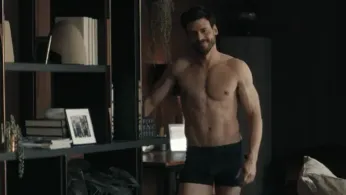
The scene that ignited debate involves Scott and Shane sharing a brief but intense interaction in the locker room after Scott observes Shane’s on-ice performance and increasingly visible tension with rival Ilya. Online, fans clipped and reposted the moment, overlaying it with captions suggesting that Scott — himself a closeted gay man in the series — was effectively clocking Shane’s queerness or hidden relationship.
Commentary quickly spread across X and TikTok, with LGBTQ+ viewers and romance fans analyzing Scott’s gaze, line delivery, and body language as signs that he recognized something of his own experience in Shane. Out magazine subsequently published an article cataloguing the “increasingly humorous” and highly engaged social media reactions to Heated Rivalry, noting that some viewers described the show’s escalating drama as “genuinely insane” in an affectionate, meme-driven way.
Speaking to Out about both the viral “back arch” shot of actor Hudson Williams and the fan theory that Scott is clocking him, Arnaud directly addressed the interpretation. According to the interview, Arnaud said that Scott is not, in fact, consciously identifying Shane as gay or in a secret relationship with a rival player in that moment.
Instead, Arnaud explained that Scott’s concern is more grounded in his role as team captain and as someone who understands the career risks of any distraction, let alone a hidden romance, in elite men’s hockey. He described Scott as reacting to patterns of behavior and emotional volatility rather than making a specific judgment about Shane’s sexual orientation.
Arnaud’s comments emphasize a key distinction for viewers: the character’s lived experience as a closeted gay man informs his empathy and suspicion, but the script and performance were not designed to confirm that Scott has definitively read Shane as queer. That clarification aligns with the broader narrative approach of Heated Rivalry, which repeatedly foregrounds how characters misread or partially understand each other’s motives under the pressure of the closet.
The series is part of a larger wave of queer sports narratives that focus on the emotional and psychological costs of remaining closeted in hypermasculine, high-stakes environments. "Heated Rivalry"’s third episode, in particular, has been described by Out as a “bucket of ice-cold water” for viewers who may have initially treated Shane and Ilya’s secret affair as primarily steamy escapism.
Episode three centers on Scott and Kip’s relationship, revealing how years of staying in the closet have taken a tangible toll on their mental health, intimacy, and life choices. Scott is portrayed as an NHL captain who has built his entire identity and career around discipline, leadership, and a strict separation between his public persona and his private life with Kip.
In recent coverage, LGBTQ+ outlets have highlighted how the episode makes visible the long-term impact of this compartmentalization, especially when compared with the comparatively earlier-stage secret romance between Shane and Ilya. The narrative suggests that what may feel “cute” or thrilling at the outset of a hidden relationship can, over a decade, harden into regret, exhaustion, and a profound sense of lost time — themes Arnaud has discussed in separate interviews about Scott’s storyline.
Off-screen, François Arnaud has been recognized as an Out100 honoree by Out magazine, reflecting his impact both as a working actor and as a publicly out bisexual man. Arnaud first spoke openly about being bisexual in 2020, posting on social media on Bisexual Visibility Day and rejecting stereotypes that bisexual people are “confused” or seeking attention.
In that post, Arnaud wrote that he had “always considered bisexual," stressing that bisexuality is a valid identity rather than a transitional phase. He also addressed how fragile concepts of masculinity can discourage people from sharing their identities, a topic he has linked to his own hesitation to come out publicly earlier in his career.
Arnaud’s casting as Scott, a gay man navigating the pressures of a professional sports career, has resonated with many bisexual and gay viewers who see value in a bisexual actor playing a gay role while remaining vocal about bi visibility. In Out’s coverage of "Heated Rivalry"’s third episode, the magazine highlighted Arnaud’s previous work, including his breakout role as Cesare Borgia on Showtime’s "The Borgias" his appearance on "Schitt’s Creek", and his more recent turns in "Surface" and "Yellowjackets", situating his portrayal of Scott within a wider body of work that often explores morally complex or emotionally conflicted characters.
The “clocking Shane” discourse around "Heated Rivalry" sits within longstanding LGBTQ+ conversations about visibility, safety, and consent. Historically, the term “clocking” has been used in queer and trans communities to describe being read as LGBTQ+ — sometimes affirmingly, sometimes in ways that increase risk in hostile environments. In the context of a show about closeted hockey players, fans’ eagerness to imagine Scott accurately perceiving Shane’s queerness reflects both a desire for recognition between queer characters and an awareness of the dangers those characters face.
For bisexual and gay viewers in particular, Arnaud’s presence as an out bisexual actor portraying a gay character navigating secrecy, desire, and leadership in a sports setting offers layered representation that intersects sexuality, masculinity, and professional ambition. The conversation around “clocking Shane” ultimately underscores how much meaning audiences are drawing from even subtle gestures within the series — and how central questions of perception, recognition, and safety remain in contemporary LGBTQ+ storytelling.